The world of the Internet of Things is a world of perception, primarily comprising the perception layer, the transmission layer, the platform layer, and the application layer. As the saying goes, a good start is half the battle. As the "vanguard" of IoT, the role of perception is unquestionably significant, especially in today's era of intelligence and the Internet of Things, where transmitters endow objects with "life."
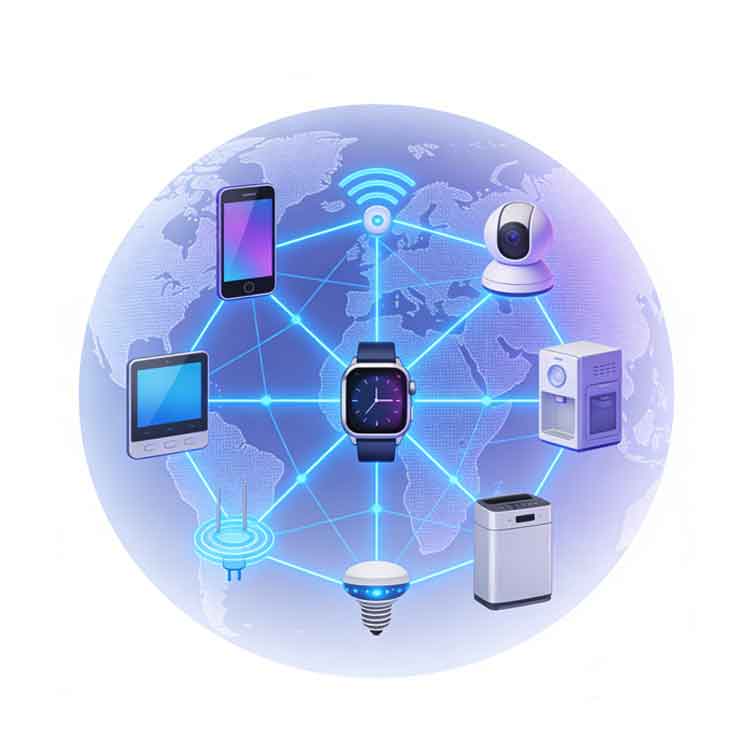
In the Internet of Things (IoT) industry, we often compare a transmitter to a human's sensory organs. However, it isn't responsible for looking beautiful; it's responsible for sensing.
First, what is a sensor? A sensor is a detection device that can sense the measured information and convert the sensed information, according to certain rules, into electrical signals or other required forms of information output to meet the requirements of information transmission, processing, storage, display, recording, and control. Its characteristics are miniaturization, digitization, intelligence, multifunctionality, systematization, and networking.
First, it is necessary to clarify the difference between a sensor and a transmitter. Nowadays, it is said that a sensor consists of two parts: a sensing element and a conversion element. Among them, the sensing element refers to the part of the sensor that can directly sense or respond to the measured variable; the conversion element refers to the part of the sensor that converts the measured variable sensed or responded to by the sensing element into an electrical signal suitable for transmission or measurement.
Transmitters come in various types. The main transmitters used in industrial control instruments include temperature transmitters, pressure transmitters, flow transmitters, current transmitters, and voltage transmitters. A transmitter is essentially a signal amplifier. Generally speaking, a transmitter provides power to the sensor and amplifies its signal.
What we are introducing today is the wireless pressure transmitter. The wireless pressure transmitter is a battery-powered, low-power, wireless digital output wireless digital pressure gauge, also known as an intelligent wireless pressure terminal.
The wireless pressure transmitter can optionally be equipped with wireless communication protocols such as GPRS, LoRa-IoT, and NB-IoT. It has a built-in laser-welded pressure sensor, which can accurately display pressure in real-time and features high precision and good long-term stability.
It is equipped with a large-size LCD display, a built-in MCU, and a low-power design, enabling the wireless transmission of on-site pipeline pressure data to the cloud.
It uses 304 connectors and a full cast aluminum housing, providing good vibration resistance. It can measure media such as gas, liquid, and oil that are not corrosive to stainless steel.
Technical features of the wireless pressure transmitter:
☆ GPRS/LoRaWAN/NB-IoT Transmission Methods
☆ Multiple Protocols: TCP/UDP/MQTT/CoAP
☆ Combined Method of Timed Reports and Event Reports to Ensure Timely Alarms
☆ Remote Parameter Configuration (Upload Frequency, Collection Frequency, Alarm Values, etc.)
☆ Four-digit LCD Screen with White Backlight
☆ Upload Interval Adjustable via Buttons, Configurable from 1 Minute to 24 Hours
☆ Low-Power Design, Powered by 3.6V Lithium Battery, Supports Over 12,000 Uploads
Application Areas: Fire Hydrant Network, Fire Endpoints, Fire Pump Rooms, Urban Water Supply, Petrochemical, and other fields requiring unattended, remote monitoring.
The Internet of Things (IoT) world is a world of perception, primarily consisting of the perception layer, transmission layer, platform layer, and application layer. Especially in today's era of intelligence and IoT, transducers give objects "life." Smart cities, smart healthcare, smart security, smart agriculture, smart water conservancy... all these rely on pressure transducers to empower their realization.