1.Agriculture weather station & agricultural sensor station
A weather station for agriculture farming is a valuable tool. It provides important agricultural sensor weather station data that helps farmers.
This data collection helps with managing crops, irrigation, pest control, and farm work. Here is a summary of key points to consider when choosing the best high quality weather station for farmers. These include important parts, features, and benefits.
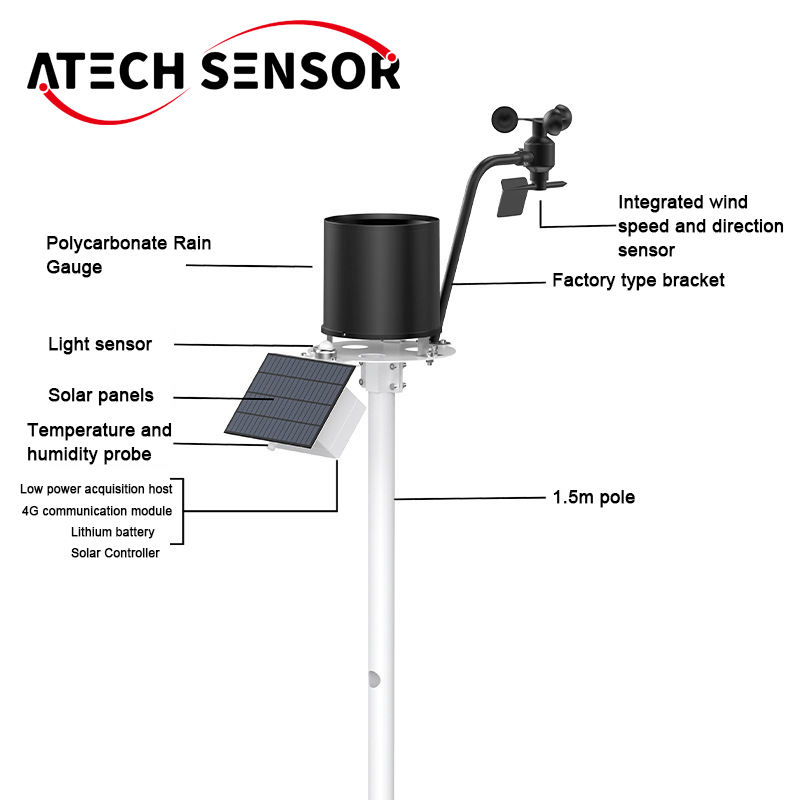
2.Key Components of Agricultural Weather Stations:
2.1. **Anemometer**:
Tracks wind speed and direction. This helps us understand wind risks and improve spray application methods.
2.2. **Rain Gauge**:
Measures rainfall levels. This is important for tracking rainfall trends and managing irrigation schedules well.
2.3. **Temperature Sensor**:
This device measures air temperature. It helps track how crops grow. It also sends frost alerts and checks for heat stress.
2.4. **Relative Humidity Sensor**:
Monitors humidity levels. This helps stop diseases, check transpiration, and plan irrigation.
2.5. **Barometric Pressure Sensor**:
Watches changes in air pressure. This helps predict weather patterns and find possible storms.
2.6. **Solar Radiation Sensor**:
This collects data on sunlight strength. It helps us see how much plants grow and how much solar energy is there.
2.7. **Soil Moisture Sensor**:
Measures soil moisture to improve irrigation schedules. This helps prevent issues like too much or too little water.
2.8. **Leaf Wetness Sensor**:
It finds moisture level or dew point on plant surfaces. This helps predict diseases and decide when to spray.
3.Features of Agricultural Weather Stations:
3.1. **Wireless Linkage**:
Allows farmers to send and receive data in real-time. They can check reliable weather conditions from anywhere.
3.2. **Data Logging**:
Stores past weather data collection. This helps with future analysis, finding trends, and making smart decisions.
3.3. **Weather Forecast Integration**:
Some farm weather stations link to forecasting services. This helps give accurate short-term and long-term weather predictions.
3.4. **Customizable Alarms**:
Sends alerts for important events like frost warnings, heavy rain, or strong winds.
3.5. **User-Friendly Interface**:
Offers easy-to-use dashboards or apps for simple data display, analysis, and reporting.
3.6. **Scalability**:
You can add extra weather sensors or modules for better monitoring. This includes uv sensor or leaf wetness sensors.
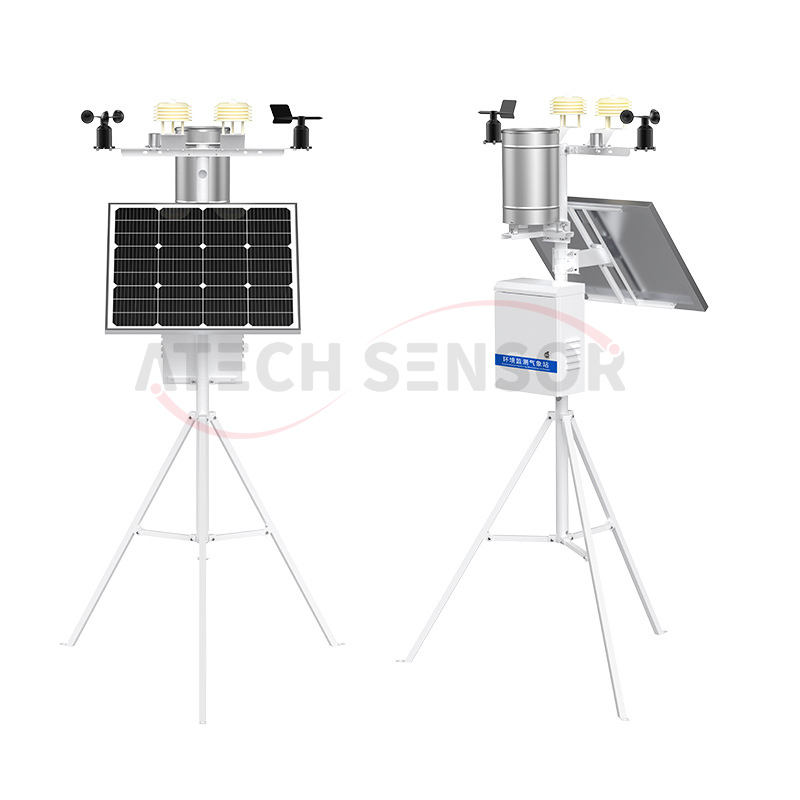
4.Advantages of Using a Weather Station in Agriculture:
4.1. **Precision Farming**:
Uses data from farm agricultural sensor station to improve farming methods. This helps lower costs and boost crop yields with accurate techniques.
4.2.**Risk Management**:
It helps find weather risks early. This lets farmers protect their crops from bad weather.
4.3. **Resource Efficiency**:
It promotes smart use of water and energy. It also helps sustainable farming by using data for decisions.
4.4. **Crop Health Monitoring**:
It helps farmers predict disease outbreaks, pest problems, and other threats to crops by looking at weather patterns.
By getting a weather station for farming, farmers can make better decisions. They can manage crops better and boost productivity. This also helps reduce risks from unpredictable weather.